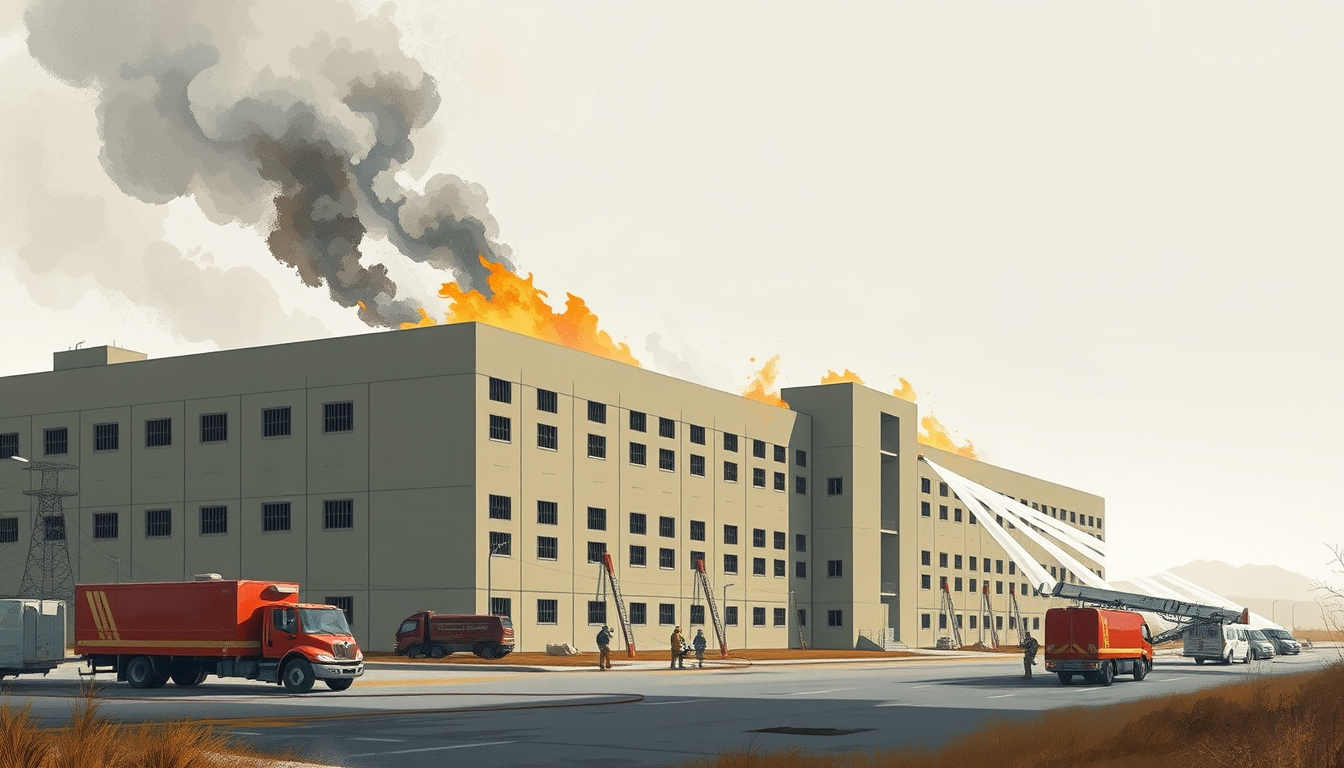
Four Canadian soldiers are dead and at least 39 wounded after a fire swept through a training exercise at CFB Wainwright on October 17, with funerals now underway and new questions emerging about what happened.
Private Shaun Farrell, 23, of Prince Albert, Saskatchewan, died when wind gusts pushed a smoldering grass fire toward soldiers in training who could not escape. The blaze killed three others and burned dozens more. Farrell will be buried on November 4 at the Prince Albert Armoury, where at least 500 military personnel are expected to attend.
Among the injured is Private Liam Ramage, 27, from Red Deer County, whose body has been burned on 40 per cent of his surface—his face, head, neck, hands, both arms, both legs, and back. His mother, Cheryl, said military officers arrived at her home at 3 a.m. to notify the family. "That was the hardest moment of my life," she said. Doctors told the family that when Ramage first arrived at Royal Alexandra Hospital in Edmonton, his injuries were so severe that his mother had to "identify him by his feet."
Private Trevor Flegel, 26, from Kitimat, British Columbia, suffered severe burns covering 50 per cent of his body in the same incident. His family said he had joined the Canadian Armed Forces in February 2024. As of October 29, a GoFundMe campaign organized by his longtime friend Kyle Germuth had raised $74,708 of a $90,000 goal. The Kitimat Ice Demons and local businesses have also organized donation drives.
Flegel's aunt, Brandi Flegel Thornton, wrote on social media six days after the fire that Flegel remained sedated in intensive care but "had begun briefly opening his eyes and appeared to recognize his family's presence." His mother, brother and stepfather travelled to Edmonton immediately and remained at his bedside.
Saskatchewan army reservists have also been mobilizing. Over $5,000 was raised through a walking campaign in support of the Wainwright victims.
But Global News reported that new information is now challenging the military's official account of how the fire started and spread. The details of those challenges have not yet been made public.
The scale of casualties from a single training exercise is rare in recent Canadian military history. That funerals are already underway—with full military honours and hundreds of serving personnel expected to attend—signals the military's acknowledgement of the severity of what occurred. The injuries to survivors are life-altering: burns covering half or more of the body, permanent disfigurement, and in Ramage's case, blindness and inability to speak. Those will require years of recovery and rehabilitation.
The fact that new information is now challenging the military's account raises questions about whether the initial explanation—wind gusts pushing a grass fire toward soldiers who had no way to escape—is complete or accurate. Until those details emerge, the full picture of what went wrong remains unclear.
Ramage remains hospitalized, unable to see or speak. Flegel is sedated and recovering in Edmonton. Farrell is being laid to rest with military honours. The question now is whether the circumstances that put them there will be fully explained to the public or to their families.